

You design a beautiful steering wheel cover, but it arrives at the store looking flat and distorted. Customers ignore deformed products. The solution is choosing the correct support insert[^1] to maintain shape and value.
Effective branding requires a support insert that balances structural rigidity with cost-efficiency. For high-volume sales, injection-molded plastic inserts[^2] offer superior shape retention compared to cardboard. They allow for custom branding directly on the mold, ensuring the product looks premium on the shelf while preventing deformation during transit.

Many designers overlook this hidden component. They focus only on the leather or fabric of the cover. However, ignoring the insert leads to wasted stock and poor sales. I have seen great products fail because they looked cheap in the packaging. I will explain how to design these inserts and handle bulk orders efficiently.
Plastic support inserts prevent steering wheel cover deformation better than cardboard.True
Plastic offers higher structural rigidity and resists humidity, maintaining the circular shape during long shipping times.
Support inserts are purely for packaging and have no impact on branding.False
Inserts maintain the product's aesthetic appeal on the shelf and can feature molded logos, directly influencing perceived brand value.
How do you design a functional support insert?
Generic inserts often fit poorly, causing the cover to slip or stretch too much. A loose cover looks cheap to buyers. You must design a custom insert to ensure a perfect fit.
The best design uses a diameter slightly larger than the relaxed cover to create tension. You should add structural ribs to the plastic ring. This adds strength without using too much material.
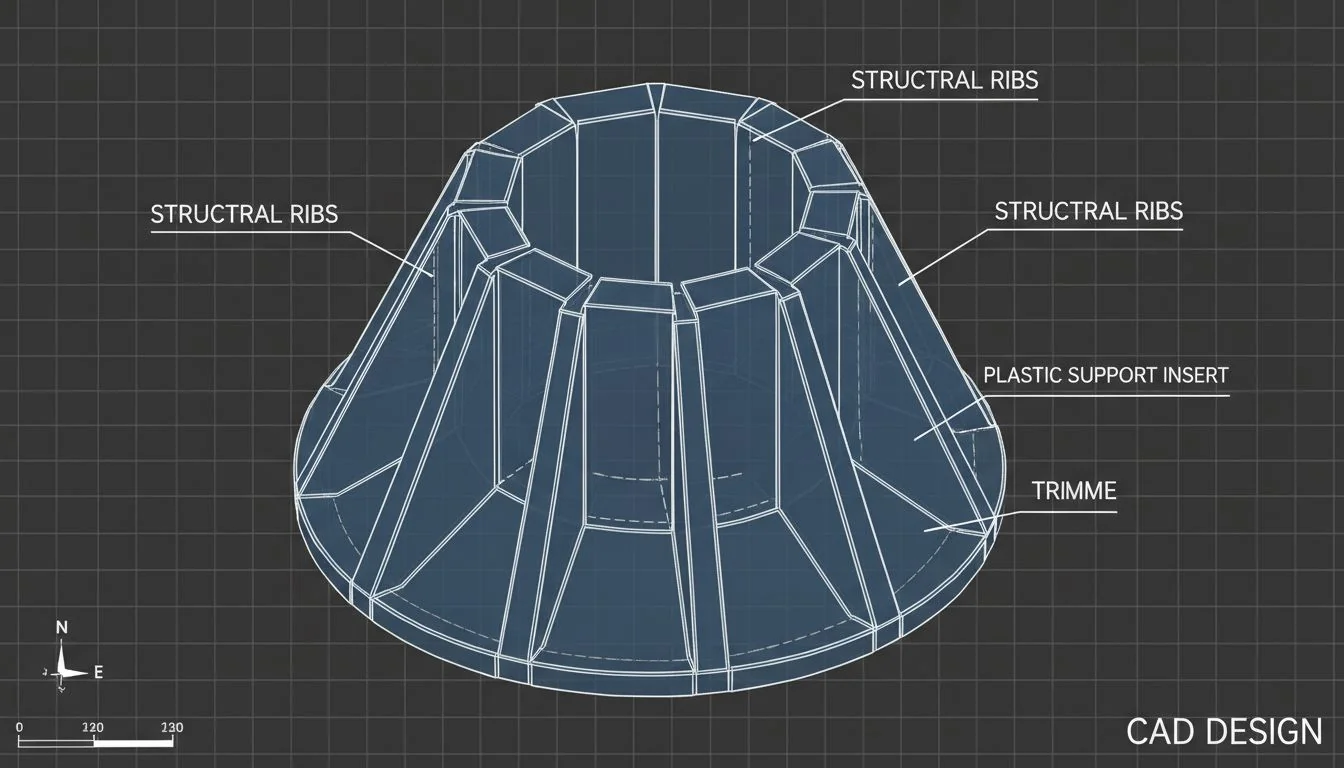
Understanding Structural Integrity
When I help clients like you design molds, we start with the function. The insert must survive the weight of stacked boxes during shipping. If you use a simple flat ring, it will buckle. You need to design an "I-beam" or "T-shape" cross-section. This geometry resists bending forces. For a standard steering wheel cover, I recommend a wall thickness between 1.5mm and 2.0mm. This is enough for strength but keeps the cooling time in the mold short.
Material Selection and Shrinkage
You know that calculating shrinkage is a challenge. For these inserts, we usually use Polypropylene (PP) or High-Density Polyethylene (HDPE). These materials are cheap and flexible. However, they shrink. In your CAD design[^3], you must account for a shrinkage rate of around 1.5% to 2.0%. If you get this wrong, the insert will be too small, and the cover will fall off. I always tell my team to leave the mold "steel safe." This means we cut the mold slightly smaller initially. We can always remove more metal to make the part bigger, but we cannot put metal back.
Branding on the Mold
This is where you can add value. Since you are making a custom mold, you should engrave your brand logo directly onto the insert. It costs almost nothing extra during the molding process. It makes the product look official. Below is a simple guide on design features:
| Feature | Recommendation | Reason |
|---|---|---|
| Wall Thickness | 1.5mm - 2.0mm | Balances strength and cycle time. |
| Rib Design | 60% of wall thickness | Prevents sink marks on the surface. |
| Draft Angle | 1 to 2 degrees | Ensures easy ejection from the mold. |
| Material | Recycled PP | Low cost and good flexibility. |
Adding structural ribs increases the weight and cost of the insert significantly.False
Ribs increase strength while allowing for thinner main walls, often reducing total material usage and weight.
Draft angles are necessary for easy part ejection from the mold.True
Without a proper draft angle, the plastic part creates a vacuum and friction against the mold walls, making it difficult to remove.
How should you handle custom bulk orders efficiently?
Steering wheel covers sell very fast in retail environments. If you run out of stock, you lose money. Rush orders often lead to quality defects. You need a solid plan for bulk production[^4].
To manage bulk orders, you must finalize the mold design early. You should use multi-cavity molds[^5] to increase production speed. This reduces the unit price and ensures you always have stock ready.
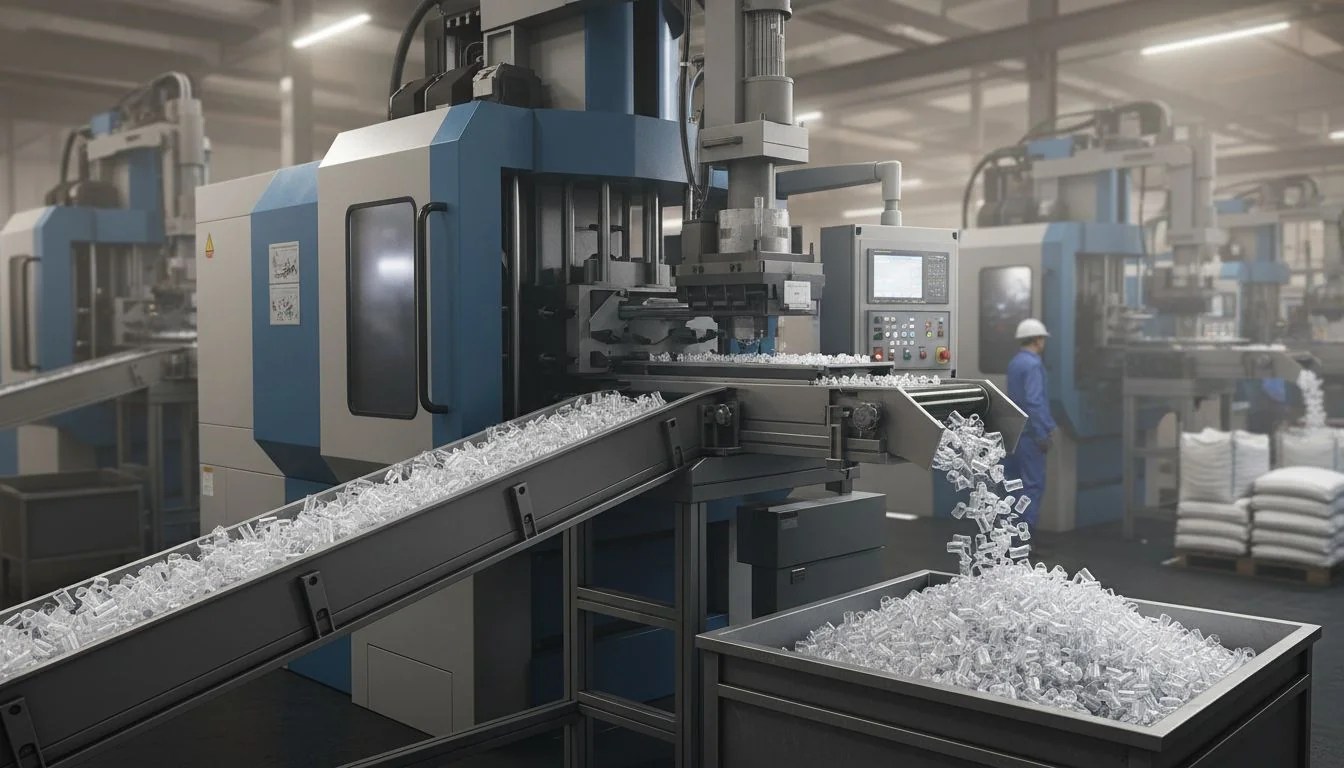
The Importance of Multi-Cavity Molds
In my experience with trading and manufacturing, volume is everything. If you order 10,000 units, a single-cavity mold is too slow. It produces one part every 30 seconds. That is too long. For bulk orders, I suggest a 4-cavity or even an 8-cavity mold. This means every time the machine opens, you get 4 or 8 parts. Yes, the mold cost is higher upfront. But the part cost drops significantly because machine time is expensive. If you plan to sell these covers long-term, the investment pays for itself in a few months.
Inventory and "Order to Stock"
You mentioned that steering wheel covers sell fast. This is a key insight. You cannot rely on "Just-in-Time" manufacturing for this item. The raw material for the inserts (plastic granules) fluctuates in price. When prices are low, I advise my clients to produce a large batch. Plastic inserts do not spoil. They do not rust. You can store them easily. Having a full stock means you can ship immediately when a big retail order comes in.
Quality Control in Mass Production
When producing in bulk, consistency is the main challenge. You do not want one batch to be slightly larger than the next. This happens if the machine parameters change. You must insist on a "Golden Sample." This is the perfect part that all other parts must match. In my factory, we keep the Golden Sample next to the machine. Operators check the production parts against it every hour. This ensures that your branding remains consistent.
| Production Method | Mold Cost | Part Cost | Production Speed |
|---|---|---|---|
| 1-Cavity Mold | Low | High | Slow |
| 4-Cavity Mold | Medium | Medium | Fast |
| 8-Cavity Mold | High | Low | Very Fast |
Multi-cavity molds increase the unit cost of production.False
Multi-cavity molds reduce unit costs by producing more parts per machine cycle, spreading the machine operating costs over more units.
Stocking plastic inserts is safe because they do not degrade quickly.True
Plastic inserts are durable and resistant to environmental factors, making them suitable for long-term storage without quality loss.
Conclusion
To succeed, you must design a strong, ribbed insert and plan for high-volume production with multi-cavity molds. This protects your product's shape and ensures you never miss a sale.
References
[^1]: Understanding the role of support inserts can enhance product presentation and prevent damage during shipping.
[^2]: Explore how these inserts maintain product shape and enhance branding, ensuring a premium look.
[^3]: Effective CAD design can streamline production and ensure product functionality.
[^4]: Learn how to optimize production processes to meet high demand without sacrificing quality.
[^5]: Discover how multi-cavity molds can reduce production costs and increase efficiency.