
You struggle to find a steering wheel cover manufacturer[^1] that meets your exact design specifications. Poor quality materials and bad fits can ruin your product line's reputation. This guide solves that problem.
The ultimate steering wheel cover relies on precise material selection[^2] and accurate mold design. Whether you choose leather, silicone, or synthetic blends, the durability depends on the manufacturing process. Sourcing custom designs from China allows for exact specifications, bulk pricing, and tailored packaging for your specific market.

I have spent years in the mold industry, and I know that the difference between a premium product[^3] and a cheap failure often comes down to millimeters. When you are designing for mass production, you need to understand the materials, the safety implications, and the sourcing logistics. Let’s explore how to master this niche.
Steering wheel covers are universally one-size-fits-all.False
Steering wheels vary significantly in diameter and grip thickness; a universal fit often results in slippage and safety hazards.
Sourcing from China allows for full customization of materials and packaging.True
Chinese manufacturers offer extensive OEM services, allowing buyers to specify materials, dimensions, and branding for bulk orders.
Which materials offer the best durability and performance?
Your design is only as good as the material you choose. If you pick the wrong substrate, the cover will degrade under UV light or peel after a few months of use.
The most durable materials for steering wheel covers are genuine leather and high-grade silicone[^4]. Leather offers longevity and a premium feel, while silicone provides excellent grip and temperature resistance. Synthetic options like PU leather are cost-effective but may not last as long as genuine hides or molded silicone.
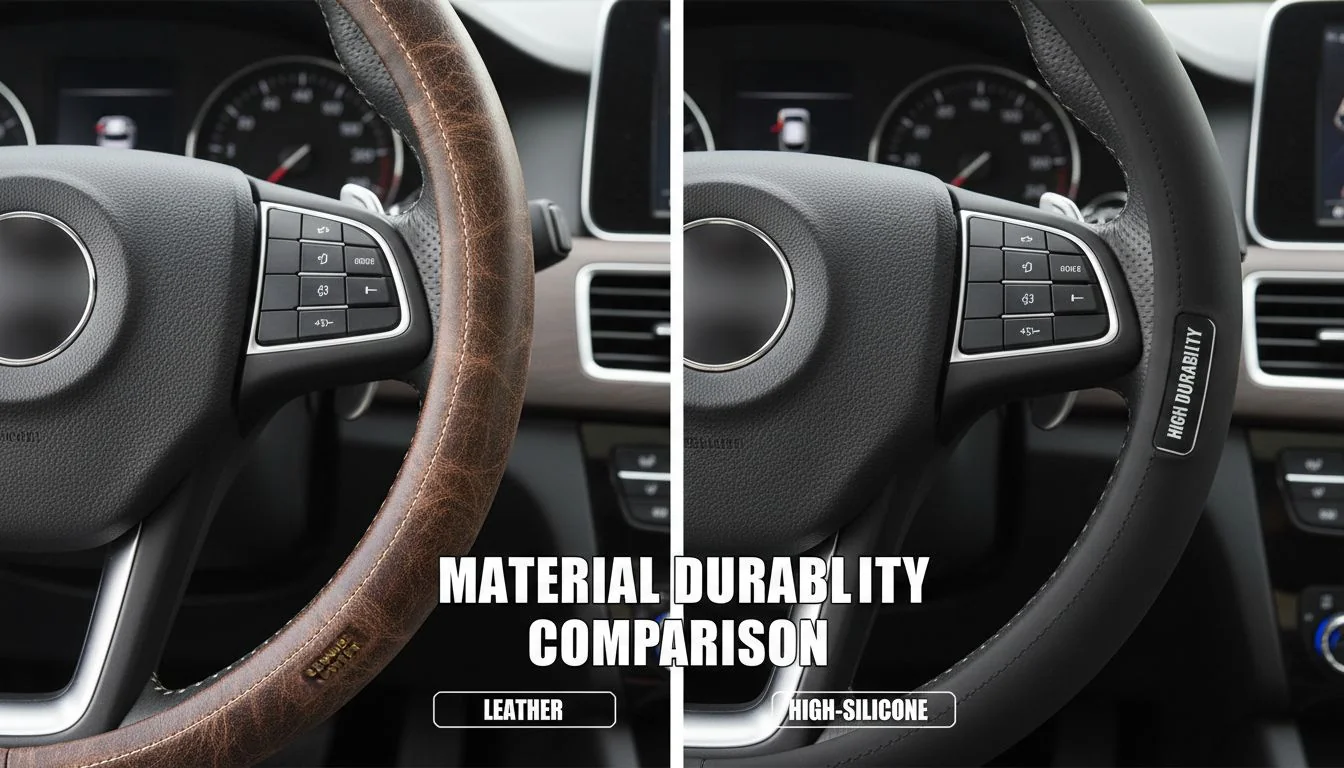
When we look at materials, we have to think about the end user's environment. As a designer, you know that thermal expansion and UV degradation are real enemies.
Leather (Genuine vs. Synthetic):
Many products labeled "leather" are actually PU (Polyurethane) or Microfiber leather. Genuine leather is porous and breathable. It creates a natural grip. However, it is expensive to source and difficult to mold perfectly without skilled stitching. PU leather is cheaper and easier to clean, but it can crack in extreme heat.
Silicone:
From a molding perspective, silicone is fascinating. It is non-toxic and highly durable. It resists heat and cold better than leather. You can mold textures directly into the surface for better grip. However, it can attract dust if not treated with a proper coating.
Plush and Cloth:
These are popular in colder climates for warmth. They are usually made from synthetic fibers. They are comfortable but can become unsanitary if they absorb sweat and are hard to clean.
Here is a breakdown of material properties for your design consideration:
| Material | Trwałość | Grip | Cost | Manufacturing Method |
|---|---|---|---|---|
| Genuine Leather | High | High | High | Stitching/Wrapping |
| PU/Synthetic | Medium | Medium | Low | Stitching/Bonding |
| Silicone | High | Very High | Medium | Injection Molding |
| Plush/Fur | Low | Low | Low | Sewing |
When you design your product, you must decide if you want the premium appeal of leather or the functional longevity of silicone.
Silicone covers are unsafe because they are slippery.False
High-quality silicone covers are designed with textured surfaces to increase friction and improve grip compared to smooth factory wheels.
Genuine leather is the only durable option.False
High-grade silicone and advanced microfiber leathers can offer equal or superior durability against UV rays and temperature changes.
How do you handle custom specifications and bulk sourcing from China?
You have a design in CAD, but you need to get it made. Finding a partner who understands your technical requirements is the biggest hurdle in the supply chain.
To custom make covers from China, you must provide specific details including the car Make, Model, and Year, or the exact steering wheel diameter. Manufacturers like JOYMAT can produce covers to your exact specifications, including custom colors, logos, and packaging, making them ideal for bulk buying.
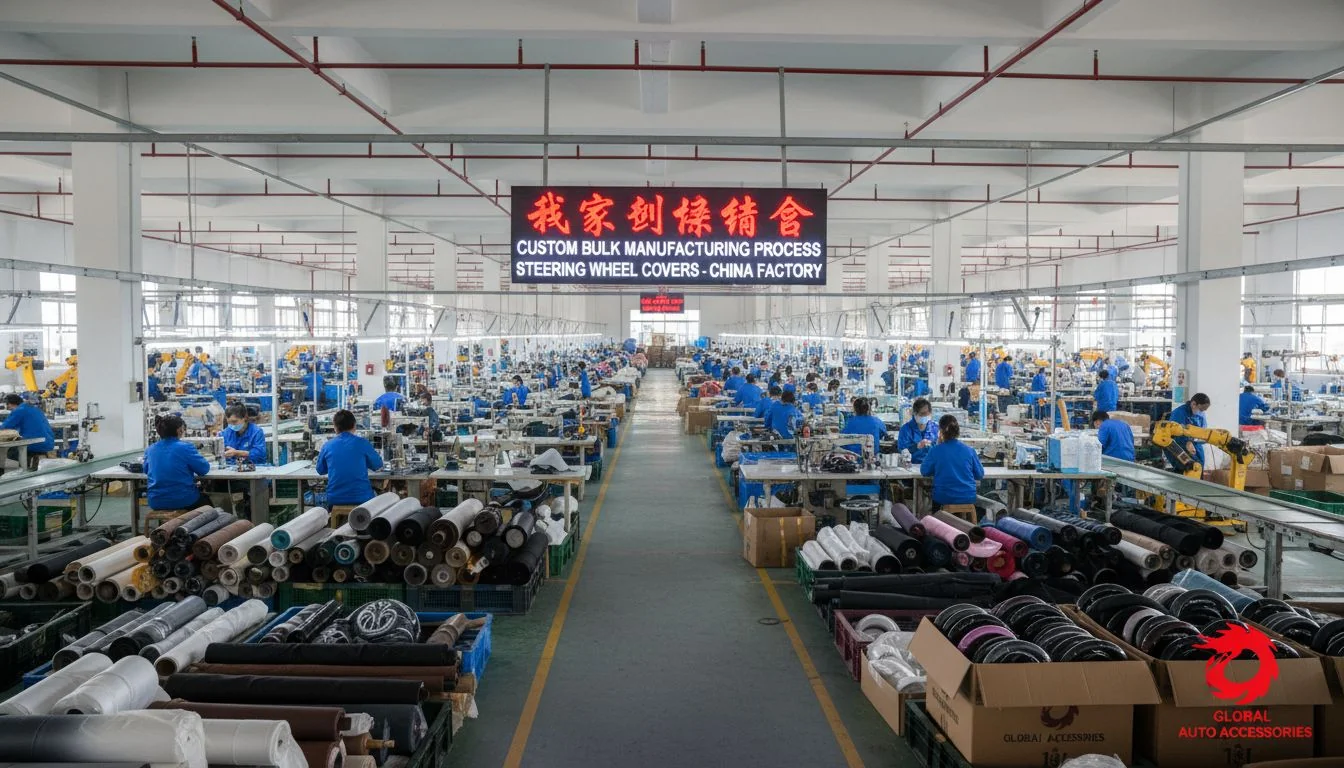
I have helped many clients navigate the Chinese manufacturing landscape. It is not just about finding a factory; it is about finding a partner who understands tolerances.
The Customization Process:
When you want to bulk buy, you cannot just say "I want a red cover." You need to be specific.
- Dimensions: You need to measure the outer diameter and the grip circumference. Most standard wheels are 14.5 Do 15 inches, but trucks and sports cars differ.
- Design Files: If you have a custom logo or a specific tread pattern for grip, you should send vector files or 3D CAD data.
- Branding: You can ask for your logo to be embossed (pressed into the material), printed, or embroidered. You also need to design the packaging. Do you want a simple poly bag or a premium box?
Why China?
China remains the best choice for this because of the supply chain integration. You can get the raw material, the molding, the stitching, and the packaging all in one region. This saves time and money. For example, a supplier like JOYMAT has 20 years of experience. They know that a cover for a Ford F-150 needs different specs than a Honda Civic. They can handle the "Make, Model, Year" matching for you.
Delivery and Warranty:
Usually, production takes 15-30 days depending on the volume. You should always ask for a sample first. Most reputable factories will give you a sample if you pay for shipping. Warranty terms usually cover manufacturing defects like stitching failure or material cracking for one year.
You can drive with a heated cover plugged in.False
Most heated covers must be unplugged before driving to prevent the cord from tangling around the steering column.
Chinese manufacturers require a minimum order of 10,000 units.False
Many manufacturers offer flexible MOQs, often starting as low as 50 or 100 units for custom orders to help businesses test the market.
Do steering wheel covers affect safety and driving dynamics?
Safety is the primary constraint in automotive design. A cover that looks good but slips during a turn is a liability lawsuit waiting to happen.
Steering wheel covers are safe and effective if they fit tightly and do not obstruct operation. They must not cover airbag deployment zones[^5]. A good cover increases the grip diameter, which can reduce hand fatigue, but it must be cleaned regularly to maintain friction.

As a designer, you must prioritize function over form. I have seen designs that look great but are dangerous in practice.
The Slippage Issue:
The number one danger is the cover rotating independently of the wheel. This happens when the inner lining does not have enough friction against the factory wheel. We often use a rubber inner ring with a tread pattern to lock it in place. If you are designing a silicone cover, the material itself provides friction, but the sizing must be exact.
Airbags and Heating:
- Airbags: Standard covers go around the rim. They do not cover the center hub where the airbag lives. Therefore, they do not affect airbag deployment. However, you must never design a cover that spans across the center.
- Heated Wheels: You can put a cover on a heated wheel, but it will insulate the heat, making the feature less effective. There are heated covers available that plug into the 12V socket, but as mentioned, you cannot drive with the cord attached.
Hygiene and Maintenance:
Steering wheels are dirty. A cover needs to be washable. Silicone covers are the easiest to clean; you can wash them with soap and water. Leather requires specific cleaners. If a cover absorbs too much oil from hands, it becomes slippery.
Market Trends by Region:
- USA/Canada: High demand for heated covers and thick, durable leather due to long commutes and cold winters.
- Australia/South Africa: High demand for breathable materials and UV protection to prevent the wheel from becoming too hot to touch.
- Europe: Preference for sleek, genuine leather that matches the OEM interior.
Steering wheel covers block airbag deployment.False
Standard covers only wrap the rim of the wheel and do not obstruct the center hub where the driver's airbag is located.
Thicker steering wheel covers reduce hand fatigue.True
A thicker grip reduces the need for a tight squeeze, which can relax the hand muscles during long drives.
Wniosek
To create the ultimate steering wheel cover, you must balance material durability with precise fitment. Sourcing from experienced Chinese manufacturers allows you to customize designs for safety and specific market trends.
References
[^1]: Discover top manufacturers that meet your design specifications and quality standards.
[^2]: Learn about the importance of material selection for durability and performance in steering wheel covers.
[^3]: Understand the key factors that differentiate premium steering wheel covers from cheaper alternatives.
[^4]: Find out why high-grade silicone is a popular choice for durability and grip in steering wheel covers.
[^5]: Explore the critical relationship between steering wheel covers and airbag safety.