
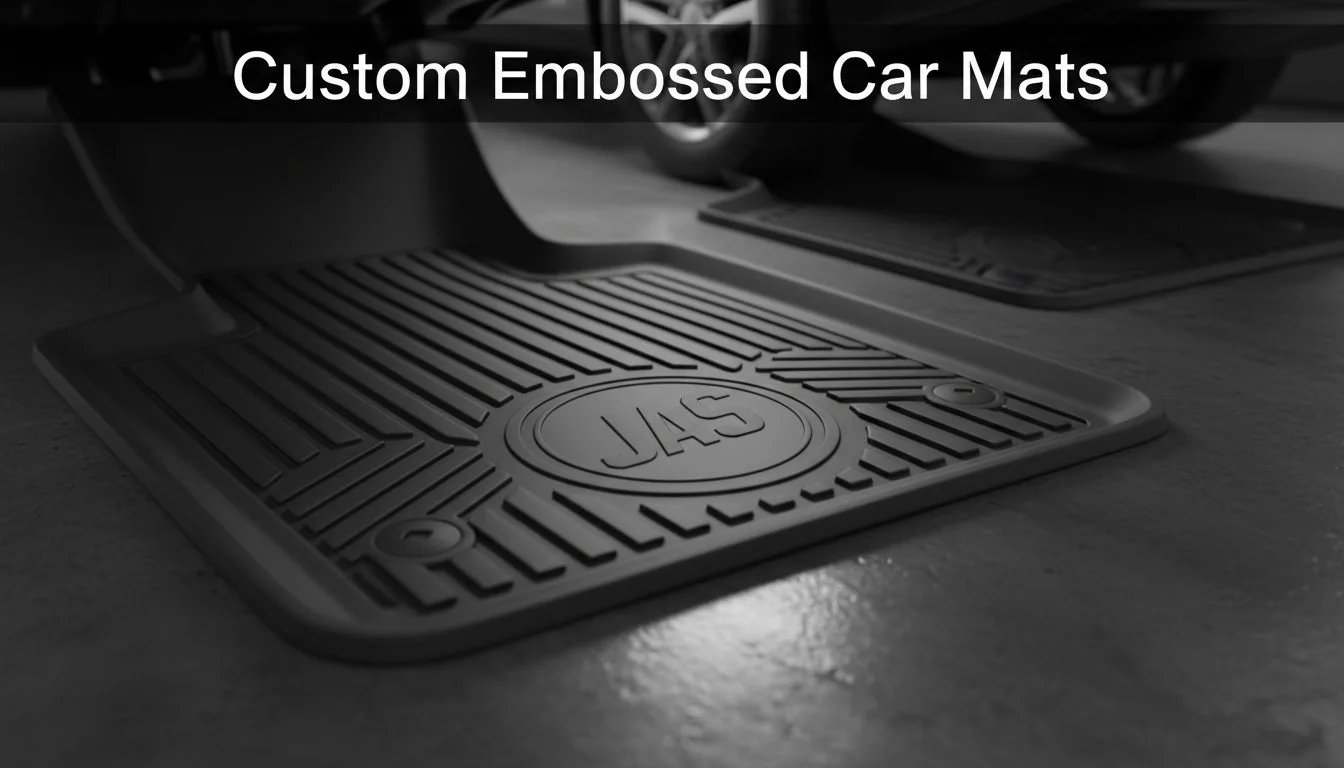
Standard car mats are boring and offer low profit margins for designers. You struggle to differentiate your product in a crowded market. Custom monogram embossing[^1] solves this by adding high value through personalized design.
Customizing latex car mats requires a specific mold design strategy using interchangeable inserts. You do not create a new mold for every customer. Instead, you design a master mold with a blank pocket, where you insert smaller, CNC-machined metal plates[^2] containing the specific monogram or logo for molding.

Many designers ignore this niche because they fear the tooling costs are too high. They assume you need a full mold for every variation. This is not true. I have seen many clients succeed by using a modular mold approach[^3]. This keeps the initial investment manageable while allowing for infinite design variations. If you understand the mold structure, you can turn a commodity product into a premium brand.
You must manufacture a completely new full-size mold for every different monogram design.False
You only need to manufacture small, interchangeable inserts for the specific logo area, which fits into a master mold base.
Latex is a suitable material for car mats due to its durability and flexibility.True
Latex offers excellent resistance to wear, water, and temperature changes, making it ideal for automotive interiors.
How to custom the mold design effectively?
You might worry that customizing molds for every client is a logistical nightmare. This fear stops many designers from offering personalization. The solution lies in smart engineering and modular mold components.
To customize effectively, you must design the main mold tool with a standardized pocket in the logo area. You then machine separate steel or aluminum inserts with the reverse image of the monogram. These inserts are swapped into the main tool during the injection or compression molding cycle.
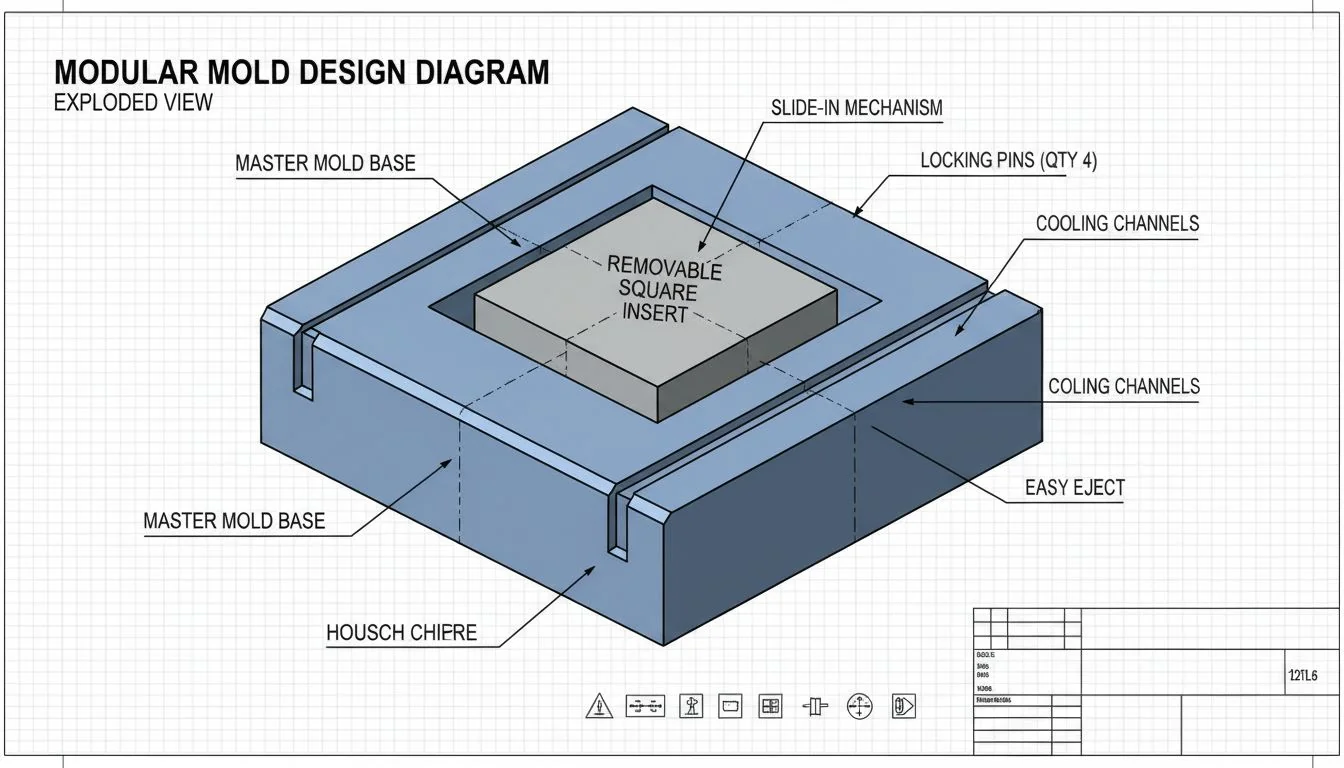
The Mechanics of Modular Mold Design
I want to dive deeper into the technical side of this because I know you deal with CAD daily. When you design the mold for these mats, you are not just drawing a mat. You are designing a system. The most critical part is the fit tolerance[^4] between the insert and the main mold pocket. If the gap is too big, you will get flash (excess material) around the logo box. This looks cheap and ruins the premium feel.
For latex or rubber materials, you also need to calculate shrinkage carefully. The shrinkage rate for the main mat might differ slightly near the insert if the thermal conductivity of the insert metal is different from the main mold base. For example, if your main mold is P20 steel but you use aluminum inserts for speed, the cooling rates will differ.
Here is a breakdown of the design considerations:
| Feature | Design Requirement | Reason |
|---|---|---|
| Insert Pocket | H7/g6 fit tolerance | Prevents flash while allowing easy removal. |
| Draft Angle | Minimum 3 degrees on logo walls | Latex is sticky; this ensures the logo releases cleanly. |
| Venting | Added to the insert perimeter | Trapped air in the logo detail causes burn marks or short shots. |
| Fastening | Magnetic or rear-screw locking | Allows for quick changeovers between production runs. |
You need to ensure your manufacturer understands these tolerances. A loose insert will destroy the aesthetic quality of the product.
Using aluminum for mold inserts can speed up the heating and cooling cycle compared to steel.True
Aluminum has higher thermal conductivity, allowing for faster heat transfer during the molding process.
You can ignore draft angles on the vertical walls of the embossed letters.False
Without proper draft angles, the latex material will stick to the mold, tearing the logo when the part is ejected.
Why to try this product category?
You may ask if the extra effort in mold design is worth the financial return. It is easy to stick to standard products. However, the profit margins in personalized goods[^5] are significantly higher.
You should try this because personalization commands a premium price point that standard manufacturing cannot match. Customers are willing to pay 30% nei 50% more for a product that feels unique to them, while your manufacturing cost only increases by the small cost of the insert.

The Economics of Personalization
From my experience helping clients grow their businesses, I have seen a clear pattern. Products that solve a specific emotional need sell for more. A car enthusiast does not just want a floor mat; they want their floor mat. They want it to match their car's color scheme or their personal brand.
Let's look at the numbers. A standard set of latex mats might cost you $15 to manufacture and sells for $40. The competition is fierce. Everyone is fighting over price. Now, look at the custom option. The base manufacturing cost is the same. The added cost is the CNC machining of the insert. If you batch your orders, this cost is negligible per unit over time.
Here is a simple breakdown of why the margin works:
| Item | Standard Mat | Custom Monogram Mat |
|---|---|---|
| Base Cost | $15 | $15 |
| Setup Cost | $0 | $5 (Amortized insert cost) |
| Retail Price | $40 | $80 - $100 |
| Gross Profit | $25 | $60 - $80 |
| Competition | High | Low |
You are selling a service, not just a product. This shifts you out of the "commodity trap." You are no longer competing with the cheapest factory on Alibaba. You are competing on brand and exclusivity.
Personalized products generally have lower profit margins due to high labor costs.False
While labor is slightly higher, the retail price increase usually far outweighs the costs, leading to higher margins.
Car enthusiasts are a demographic known for spending money on aesthetic modifications.True
The automotive aftermarket industry is driven by owners wanting to customize and upgrade the look of their vehicles.
What's the selling trend in automotive accessories?
You need to know if this is just a fad or a long-term market shift. Trends can be dangerous if you enter them too late. Currently, the automotive accessory market is moving heavily toward individual expression.
The current selling trend is "OEM Plus," where owners want accessories that look factory-made but are customized to their taste. Buyers are moving away from flashy, cheap-looking universal parts and demanding high-quality, integrated designs that feature their initials, car model names, or club logos.

Analyzing the "OEM Plus" Movement
I have watched the mold industry for years, and the demand for high-precision textures is rising. In the past, people bought "one size fits all" rubber mats. They were ugly but functional. Today, Jacky, you know that design aesthetics are crucial. The "OEM Plus" trend means the product must fit perfectly and look like it belongs in a luxury car.
The trend is also fueled by social media. Car owners love to post photos of their interiors on Instagram and TikTok. A generic black mat is invisible. A mat with a custom embossed monogram pops on camera. This provides free marketing for your brand.
Here are the key drivers of this trend:
| Trend Driver | Description | Impact on Design |
|---|---|---|
| Social Media | Visual appeal is paramount. | Logos must be deep, sharp, and high-contrast. |
| Luxury Entry | Economy cars are getting luxury features. | Owners want accessories that elevate the feel of cheaper cars. |
| Gift Market | Personalized items are top gift choices. | Packaging and unboxing experience become important. |
You are not just selling to the car owner. You are selling to the spouse looking for a birthday gift. This expands your target audience significantly.
The 'OEM Plus' trend refers to modifying a car to look like a higher-spec factory version.True
Enthusiasts use this term to describe upgrades that look authentic and high-quality, rather than aftermarket and cheap.
Social media has little impact on the sales of automotive interior accessories.False
Visual platforms like Instagram drive trends, as owners want to show off unique details of their vehicle interiors.
How about selling in Amazon?
You might be thinking about using Amazon FBA as your primary sales channel. It is the biggest marketplace, but it comes with specific challenges for heavy products like latex mats.
Selling custom latex mats on Amazon is viable, but you must be careful with weight and fulfillment methods. Since latex is heavy, FBA fees can kill your profit margin, so you might prefer FBM (Fulfilled by Merchant) for custom orders to avoid storage fees and allow for the personalization time.

Logistics and Platform Strategy
Amazon is a beast. I have helped clients navigate this. The biggest issue with latex mats is the weight. A full set of mats can weigh 5kg to 8kg. Amazon's FBA fees are based on size and weight. If you are not careful, the shipping cost will eat all your profit.
Also, Amazon is designed for "ready to ship" items. Customization adds a lead time. Amazon has a program called "Amazon Custom[^6]," which allows you to sell personalized items. However, you usually have to fulfill these yourself (FBM) because the inventory does not exist until the customer orders it.
Here is a strategy table for Amazon:
| Factor | FBA (Fulfilled by Amazon) | FBM (Fulfilled by Merchant) | Recommendation |
|---|---|---|---|
| Shipping Speed | Prime (1-2 days) | Slower (depends on you) | Use FBM for custom orders. |
| Fees | High for heavy items | Lower (you control shipping) | FBM protects margins on heavy mats. |
| Customization | Difficult | Easy | FBM gives you time to mold the custom insert. |
| Rank | Higher visibility | Harder to rank | Drive traffic from social media to your Amazon listing. |
My advice is to use Amazon as a storefront but handle the logistics yourself or with a third-party logistics (3PL) partner who understands custom manufacturing.
Amazon FBA fees are calculated solely based on the price of the product.False
FBA fees are primarily determined by the dimensions and weight of the packaged product.
Amazon Custom is a program that allows sellers to offer personalized products.True
This feature allows customers to input text or upload images before adding the product to their cart.
Where to find a suitable manufacturer?
You know the design, but you need a partner to make it. Finding a factory that accepts low-volume customization is the hardest part of this business model.
You should look for a suitable manufacturer in China, specifically in regions like Ningbo or Dongguan, known for mold and rubber production. You need a partner willing to store your master mold and quickly machine inserts for small batches, rather than a mass-production factory that only wants orders of 10,000 units.
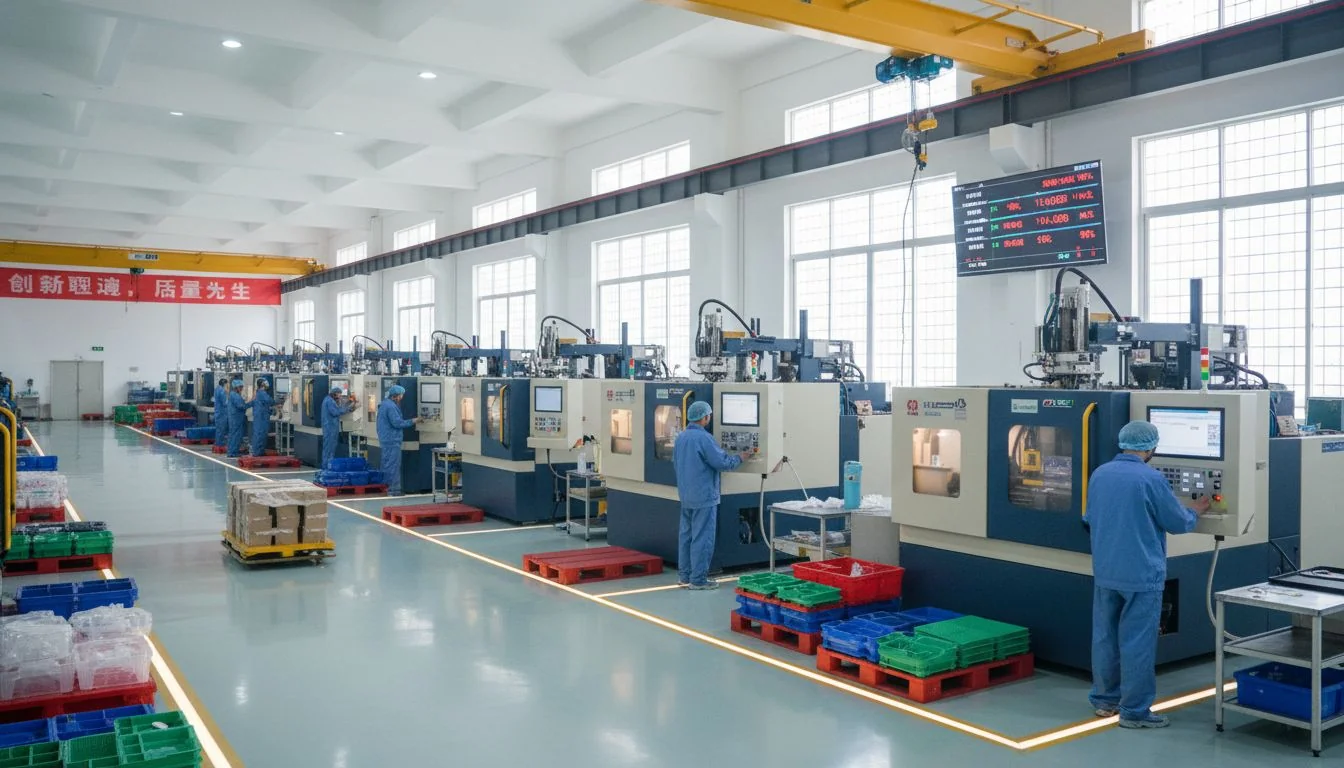
Sourcing the Right Partner
I have spent years in this industry. I started on the factory floor. I know how these bosses think. Most big factories will ignore you if you ask for "one custom mat." They want to run the machine for 24 hours straight.
You need a medium-sized factory. You need a partner who understands the "service" aspect. When you search on Alibaba or Made-in-China, do not just look at the product photos. Everyone steals photos. Look at their equipment list. Do they have their own CNC machines? If they outsource CNC, your lead times will be too long.
Here is a checklist for vetting a supplier for this specific project:
| Question to Ask | Desired Answer | Why? |
|---|---|---|
| "Do you have in-house CNC?" | "Yes." | You need fast turnaround for the custom inserts. |
| "Can we use a master mold system?" | "Yes, we have done this." | Shows they understand the technical requirement. |
| "What is the MOQ for a custom logo?" | "1 piece is okay if you pay for the insert." | You need flexibility. |
| "Can you show me a video of the mold?" | Sends video. | Proves they actually have the mold and aren't a middleman. |
Cooperating with a Chinese manufacturer is your best option for cost efficiency. The tooling cost in China is often 20% of the cost in Canada or the US.
All Chinese manufacturers require a Minimum Order Quantity (MOQ) of at least 1,000 units.False
Many small to mid-sized factories are willing to work with lower MOQs, especially for high-value custom items.
Ningbo and Dongguan are major hubs for mold and plastic manufacturing in China.True
These cities have dense supply chains for tooling, raw materials, and skilled labor in the molding industry.
Custom with logo?
You have mastered text monograms, but clients will ask for complex logos[^7]. This adds a layer of technical difficulty to the mold design.
Customizing with a logo requires more advanced processing than simple text because logos often have complex curves and fine details. While text can be CNC machined easily, complex logos might require EDM (Electrical Discharge Machining) to create the mold insert, which increases cost and time.
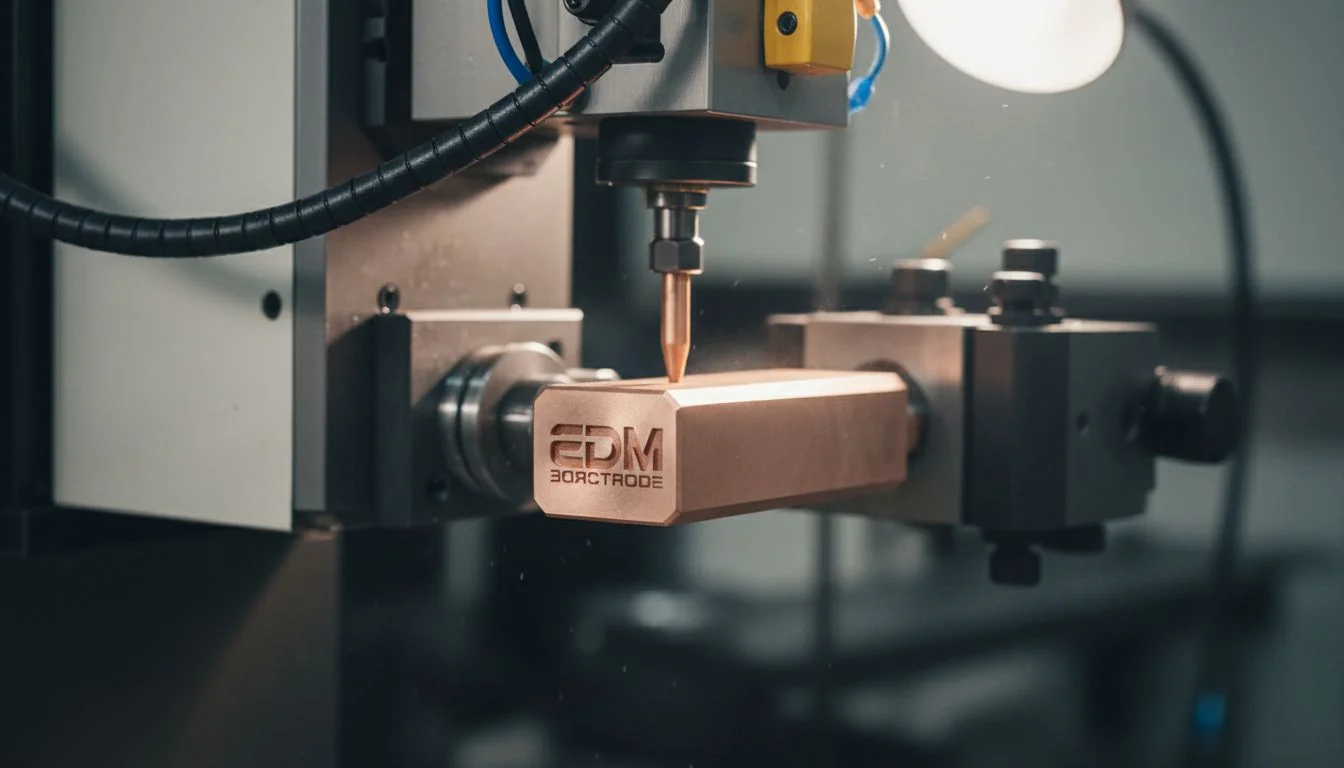
Technical Constraints of Logo Embossing
Jacky, as a designer, you know that not every graphic works in a mold. A logo on a screen looks perfect. A logo in a steel mold has physical limitations. You cannot have sharp internal corners in a CNC process because the cutting tool is round.
If a client sends a logo with tiny, sharp details, you have two choices. One, you simplify the design (increase radii). Two, you use EDM. EDM uses a copper electrode to burn the shape into the steel. It is precise but slow and expensive.
You must set guidelines for your customers.
| Feature | CNC Machining (Cheaper/Faster) | EDM (Expensive/Slower) |
|---|---|---|
| Internal Corners | Must have a radius (e.g., R0.5mm) | Can be sharp |
| Detail Size | Limited by tool diameter | Very fine details possible |
| Surface Finish | Visible tool marks possible | Matte or textured finish |
| Cost | Low | High |
For a scalable business, I recommend sticking to designs that can be CNC machined. Educate your customers. Tell them that for the best result on a car mat, bold and simple logos work best. They last longer under foot traffic and are easier to clean.
CNC milling machines can create perfectly sharp internal 90-degree corners.False
CNC tools are rotating cylinders, so they always leave a radius on internal corners matching the tool's radius.
EDM stands for Electrical Discharge Machining.True
It is a manufacturing process whereby a desired shape is obtained using electrical discharges (sparks).
Conclusion
Custom latex car mats offer a high-margin opportunity if you utilize a modular mold design with interchangeable inserts. By partnering with a flexible Chinese manufacturer and focusing on the "OEM Plus" trend, you can build a profitable brand that stands out from generic competitors.
References
[^1]: Explore how custom monogram embossing can enhance product value and customer satisfaction.
[^2]: Discover the role of CNC-machined metal plates in creating precise and customizable designs.
[^3]: Learn about the advantages of using a modular mold approach to reduce costs and increase design flexibility.
[^4]: Explore the significance of fit tolerance in ensuring quality and precision in product design.
[^5]: Understand the financial benefits of offering personalized products in a competitive market.
[^6]: Get insights into how Amazon Custom can help you sell personalized products effectively.
[^7]: Understand the challenges and solutions for designing complex logos for production.